
New York Department of Labor Audits: What Every NYC Business Owner Needs to Know
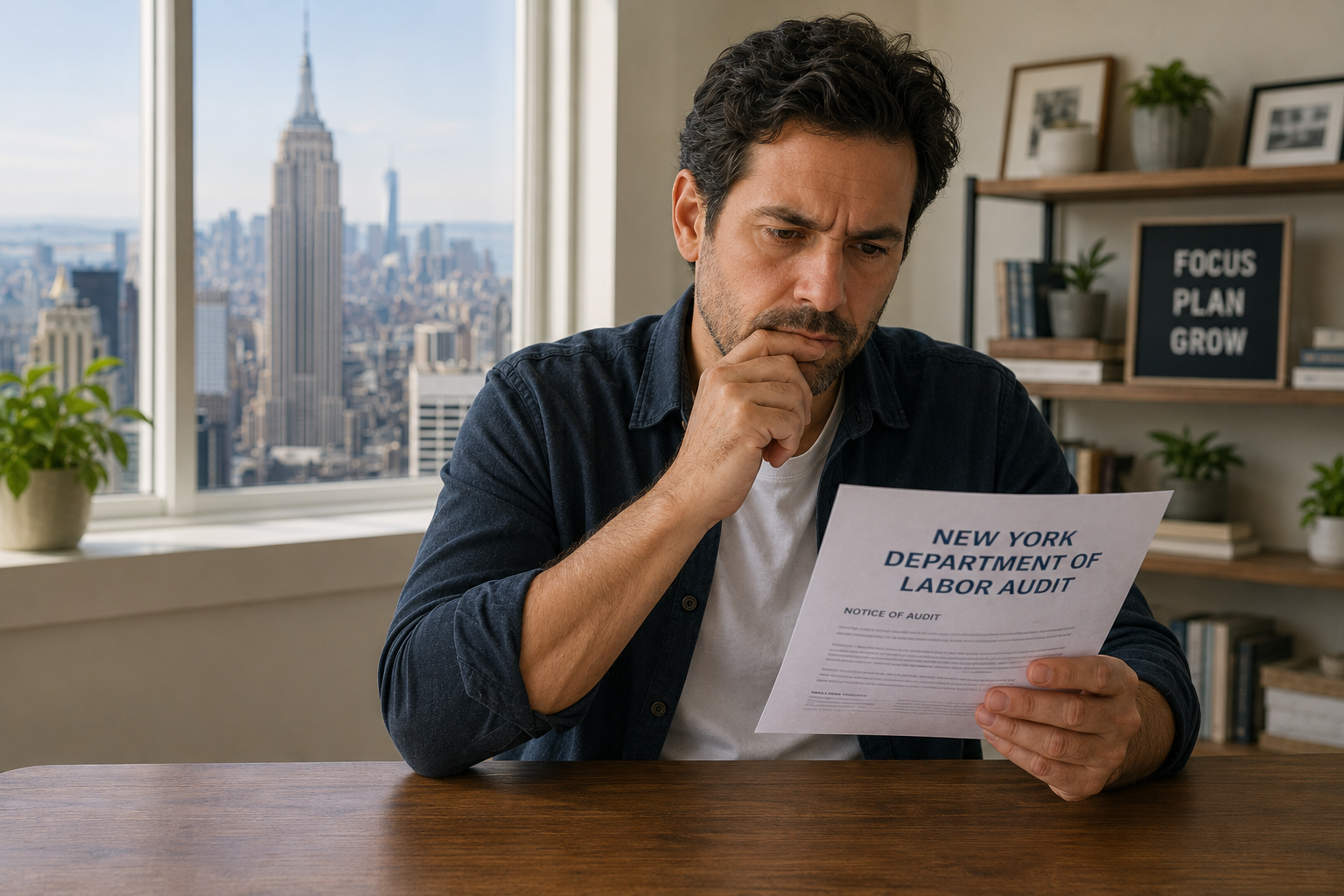
Running a business in New York City comes with no shortage of challenges. One issue that catches many business owners off guard is a New York Department of Labor Audit. Whether you’re hiring employees, independent contractors, or a combination of both, understanding worker classification rules can help you avoid costly penalties, back taxes, and compliance headaches.
At our firm, we’ve helped many business owners navigate audits and resolve worker classification issues before they become major financial problems. Here’s what you need to know.
What Triggers a New York Department of Labor Audit?
A New York Department of Labor Audit can happen for several reasons, but one of the most common involves independent contractors who also have traditional W-2 jobs.
When a contractor loses their W-2 position and applies for unemployment benefits, they must report all sources of income. If they list your company as a source of income, New York State may discover that there is no record of payroll taxes being paid on their behalf.
This often raises a red flag and can lead auditors to ask an important question:
Should this worker have been classified as an employee instead of a contractor?
New York Department of Labor Audit Red Flags
Several factors increase the likelihood of scrutiny during a New York Department of Labor Audit.
Contractors Who Work Exclusively for You
If a contractor only works for your company, the Department of Labor may view them as economically dependent on your business, making them appear more like an employee.
You Control Their Schedule and Work Methods
Independent contractors should generally control how and when they perform their work. If you dictate their hours, schedule, processes, or daily activities, auditors may determine they are employees.
They Perform Core Business Functions
This is one of the biggest warning signs. For example, hiring an attorney or accountant as a contractor is generally less problematic because they provide specialized services outside your primary business operations.
However, if you hire contractors to perform the same work that generates revenue for your company, such as serving clients or delivering your primary service, auditors may view them as employees.
You’re in a High-Risk Industry
Certain industries receive increased scrutiny because worker classification issues are more common. Businesses in these industries often face a higher likelihood of audit activity:
These include:
- Construction
- Restaurants
- Catering businesses
- Delivery services
- Hospitality businesses
Employee Complaints Can Trigger a New York Department of Labor Audit
Not every audit begins with contractor classification issues. Once a complaint is filed, the Department of Labor may expand its review beyond the original issue and examine broader payroll practices. Current or former employees may file complaints regarding:
- Unpaid overtime
- Minimum wage violations
- Improper payroll deductions
- Missed meal breaks
- Wage payment disputes
What Documents Should You Have Ready?
If you receive a New York Department of Labor Audit notice, preparation is critical. It’s especially important to clearly demonstrate the role and responsibilities of anyone classified as an independent contractor.
You should gather:
- Payroll records
- Timekeeping records
- Employee handbooks
- Employment agreements
- Independent contractor agreements
- Job descriptions
- Organizational charts
- Documentation explaining each worker’s duties
Will a Contractor Agreement Protect You?
Many business owners assume that having a signed contractor agreement automatically solves classification issues. Unfortunately, that’s not true.
While written agreements are important, auditors focus primarily on the actual working relationship rather than the contract language.
One helpful factor is hiring a legitimate business entity rather than paying an individual directly. However, even that alone won’t prevent reclassification if the facts suggest an employer-employee relationship.
Best Practices to Avoid Worker Misclassification
The easiest audit is the one that never happens. Consider these best practices:
1- Use Written Contractor Agreements
Every contractor relationship should be documented with a detailed written agreement.
2 – Pay Business Entities Whenever Possible
Working with a properly established business entity rather than an individual may strengthen your classification position.
3 – Avoid Excessive Control
The more control you exercise, the greater the risk of employee reclassification. Independent contractors should generally control:
- Their schedules
- Their methods of work
- Their tools and equipment
- Their business operations
What to Do If You Receive a New York Department of Labor Audit Notice
The most important advice is simple:
Don’t Ignore It
Ignoring an audit notice can make the situation significantly worse. Even if you need additional time to gather records or consult professionals, respond promptly to the Department of Labor. Communication demonstrates good faith and may help prevent additional complications.
Work With a Professional
Depending on the nature of the audit, consider working with:
- A CPA or accountant experienced in worker classification issues
- An employment attorney for wage and labor disputes
Attempting to handle a complex audit without professional guidance can be risky.
What Step to Take After a New York Department of Labor Audit
Many business owners don’t realize that state and federal agencies often share information. If New York State reclassifies your contractors as employees, the IRS will likely be notified.That’s why taking proactive action is critical.
If the IRS learns about the issue directly from New York State, you may face:
- Back payroll taxes
- Interest charges
- Penalties
- Additional compliance reviews
However, if you voluntarily address the issue with the IRS before they receive notice from the state, penalties can often be reduced significantly. In some cases, businesses may qualify for the IRS Voluntary Classification Settlement Program (VCSP) that substantially lower their tax liability.
What to do if the IRS catches you first? Then it is important to consider the NYS Voluntary Disclosure Program. We have helped clients save tens of thousands using this program.
Final Thoughts on a New York Department of Labor Audit
A New York Department of Labor Audit often begins with employee complaints, unemployment claims, or worker misclassification concerns. While audits can be stressful, proper documentation, timely responses, and professional guidance can significantly improve the outcome.
If your business relies on independent contractors, now is the time to review your classification practices, ensure your records are complete, and address potential issues before they attract attention from state or federal agencies.
Taking proactive steps today can save your business thousands of dollars in taxes, penalties, and legal costs tomorrow.
Free Resource for NYC Business Owners
Looking for more practical guidance on operating a business in New York City?
Download our free New York City Business Owner Guide to learn about common compliance challenges, tax issues, and strategies to help your business succeed.