
Multi-State Tax Nexus: Why Your “Single-State” Business Might Secretly Owe Taxes Across the Country
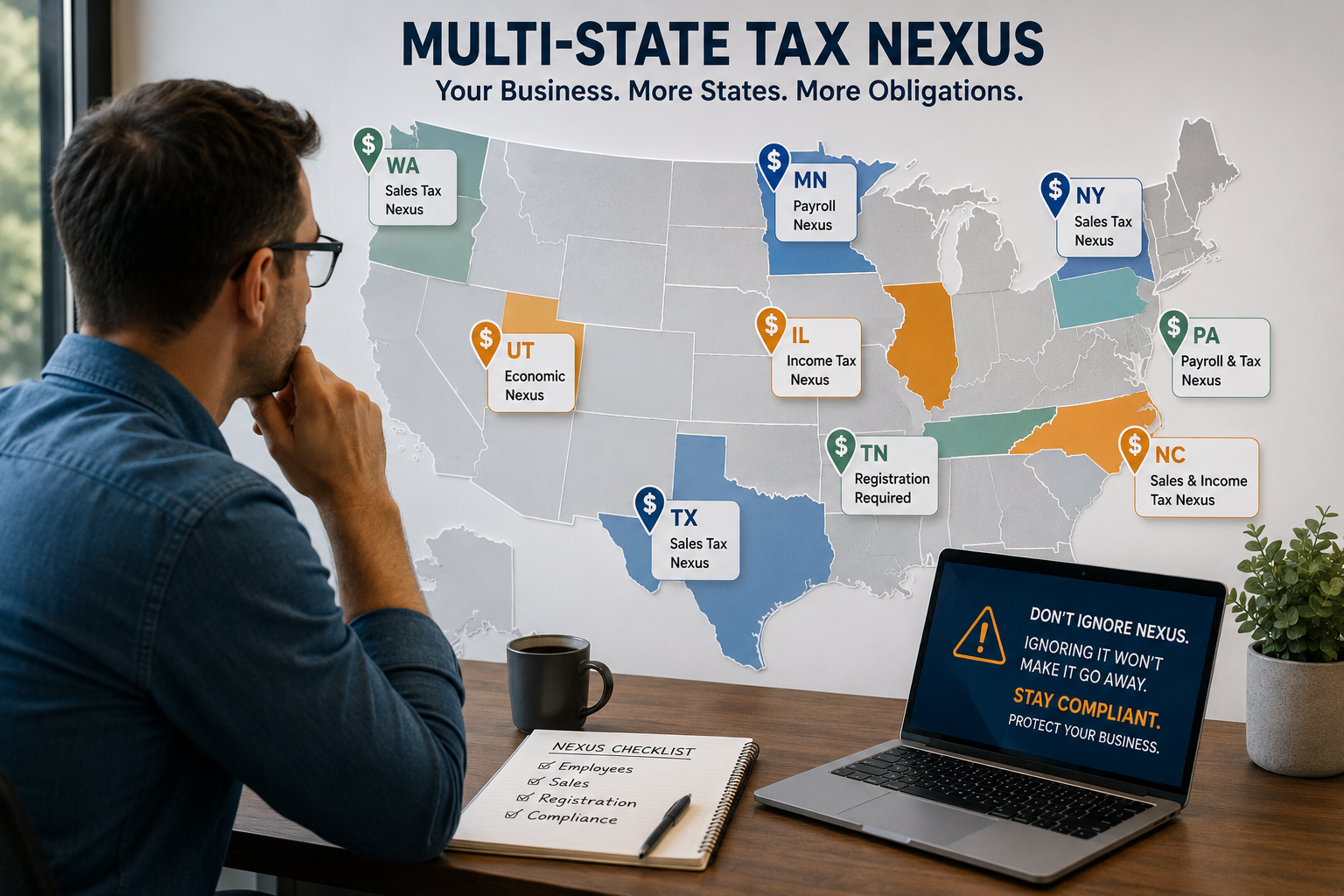
Many business owners assume that if their company operates from one state, their tax obligations stay there too. Unfortunately, that’s not always true. Multi-state tax nexus has become one of the biggest compliance challenges facing growing businesses, especially those with remote employees, online sales, and customers spread across the country.
We’ve had the opportunity to help clients pursue exciting growth opportunities across the country. We welcomed a new intern in Pennsylvania for our firm. One client is expanding their live event presence by launching merchandise sales at U.S. shows. Another client transitioned from selling exclusively to corporations to offering services directly to consumers nationwide. And one ambitious client is taking advantage of a major opportunity by joining the FIFA Fan Zone during the World Cup. Yet another client recently moved themselves and their business from California to New York, while still maintaining a limited amount of work in California.
These just a few examples of the kinds of growth milestones business owners work hard to achieve. But behind each exciting expansion is an important question many businesses overlook: What new tax obligations come with that growth?
The reality is that your business can create tax obligations in states you’ve never visited. A single remote employee, growing online sales, or expanding into new markets can trigger filing requirements, registrations, and potential penalties.
Let’s break down what you need to know before a state tax agency comes knocking.
What Is Multi-State Tax Nexus?
Multi-state tax nexus is the legal connection between your business and a state that requires you to register, collect, report, or pay taxes there.
In today’s remote and digital economy, nexus isn’t determined solely by where your office is located. States can establish nexus through employee presence, sales activity, inventory storage, and other business operations.
Ignoring nexus obligations doesn’t make them disappear. Instead, it can lead to back taxes, interest charges, penalties, and costly compliance headaches down the road.
Multi-State Tax Nexus and the Remote Employee Trap
One of the most common ways businesses unknowingly create multi-state tax nexus is by hiring a remote employee.
Many business owners focus on finding the best talent, regardless of location. What they don’t realize is that hiring just one employee in another state often creates immediate tax obligations.
This frequently causes payroll processing issues. Software platforms like QuickBooks and Gusto often require state tax registrations before payroll can be processed.
Some business owners attempt workarounds by withholding taxes in their home state instead of the employee’s work state. This creates significant problems later, including:
- Incorrect tax withholding
- W-2 reporting errors
- Employee tax filing complications
- Potential state penalties
- Additional compliance requirements like paid family leave programs
The moment an employee works in another state, that state may consider your business to be operating there.
Understanding Economic Nexus
Physical presence isn’t the only trigger for multi-state tax nexus anymore. Following the landmark South Dakota v. Wayfair Supreme Court decision, states gained the ability to impose tax obligations based solely on economic activity within their borders.
This concept is known as economic nexus. Many states use thresholds such as:
Annual Sales Threshold
- $100,000 in annual sales within the state
Transaction Threshold
- 200 separate transactions annually within the state
Once your business exceeds these limits, you may be required to register and collect sales tax—even if you’ve never physically entered the state. For growing businesses, especially online sellers, these thresholds can be reached surprisingly quickly.
Multi-State Tax Nexus and Foreign Qualification
One of the most overlooked compliance steps involves foreign qualification.
When expanding into new states, many business owners try to apply directly for tax accounts or sales tax permits. However, many states require a prior step known as foreign qualification. Here’s how it works:
- Your home state is considered your “domestic” state.
- Every other state views your company as a “foreign” entity.
- Before opening tax accounts, you may need to register your business with that state’s Secretary of State.
Without foreign qualification, many registration applications cannot be completed because they require a state registration number you don’t yet have. This often creates frustrating delays and compliance roadblocks.
Why E-Commerce Businesses Face the Biggest Multi-State Tax Nexus Risk
E-commerce businesses are particularly vulnerable to multi-state tax nexus issues. Unlike local service businesses, online retailers can generate sales in dozens of states simultaneously.
Many entrepreneurs assume that platforms like Amazon, Shopify, Etsy, or Walmart Marketplace handle all tax compliance responsibilities. While these platforms may assist with tax collection in certain situations, business owners remain responsible for:
- Proper state registrations
- Nexus monitoring
- Tax filings
- Compliance reporting
As sales grow, businesses can exceed economic nexus thresholds in multiple states at once.
Without proper tracking, it’s easy to lose visibility into where registration and filing requirements exist.
The Hidden Cost of Leaving States Behind
Creating nexus isn’t the only concern. Ending nexus relationships incorrectly can create problems too.
Many business owners assume that once they stop operating in a state, they can simply stop filing returns. Unfortunately, states often require formal account closures and withdrawal filings. Failing to complete these steps can result in:
- Ongoing notices
- Filing requirements
- Penalties
- Administrative fees
- Collections activity years later
These “ghost accounts” can continue generating problems long after you’ve stopped doing business in that state. Proper business maintenance is just as important as proper registration.
How to Manage Multi-State Tax Nexus Before It Becomes Expensive
The good news is that most nexus issues are preventable. Here are three proactive steps every business owner should take:
1. Audit Your Nexus Footprint
Review:
- Employee locations
- Contractor locations
- Sales activity by state
- Inventory storage locations
Monitor states where you’re approaching nexus thresholds.
2. Register Correctly
Before applying for tax accounts:
- Determine if foreign qualification is required
- Register with the Secretary of State when necessary
- Obtain required tax IDs and permits
Following the proper sequence prevents registration delays.
3. Establish a Compliance Process
Create a system to manage:
- Filing deadlines
- Zero-dollar returns
- Account maintenance
- State withdrawals
- Ongoing nexus reviews
Regular monitoring can prevent costly surprises later.
Final Thoughts
As businesses become more remote and sales become more digital, multi-state tax nexus is no longer an issue reserved for large corporations.
Whether you’re hiring remote employees, expanding online sales, or entering new markets, understanding your nexus footprint is essential.
The cost of proactive compliance is almost always lower than the cost of back taxes, penalties, and audits.
The question is simple: Have you reviewed your multi-state tax nexus obligations recently—or are you waiting for a state tax agency to do it for you?