
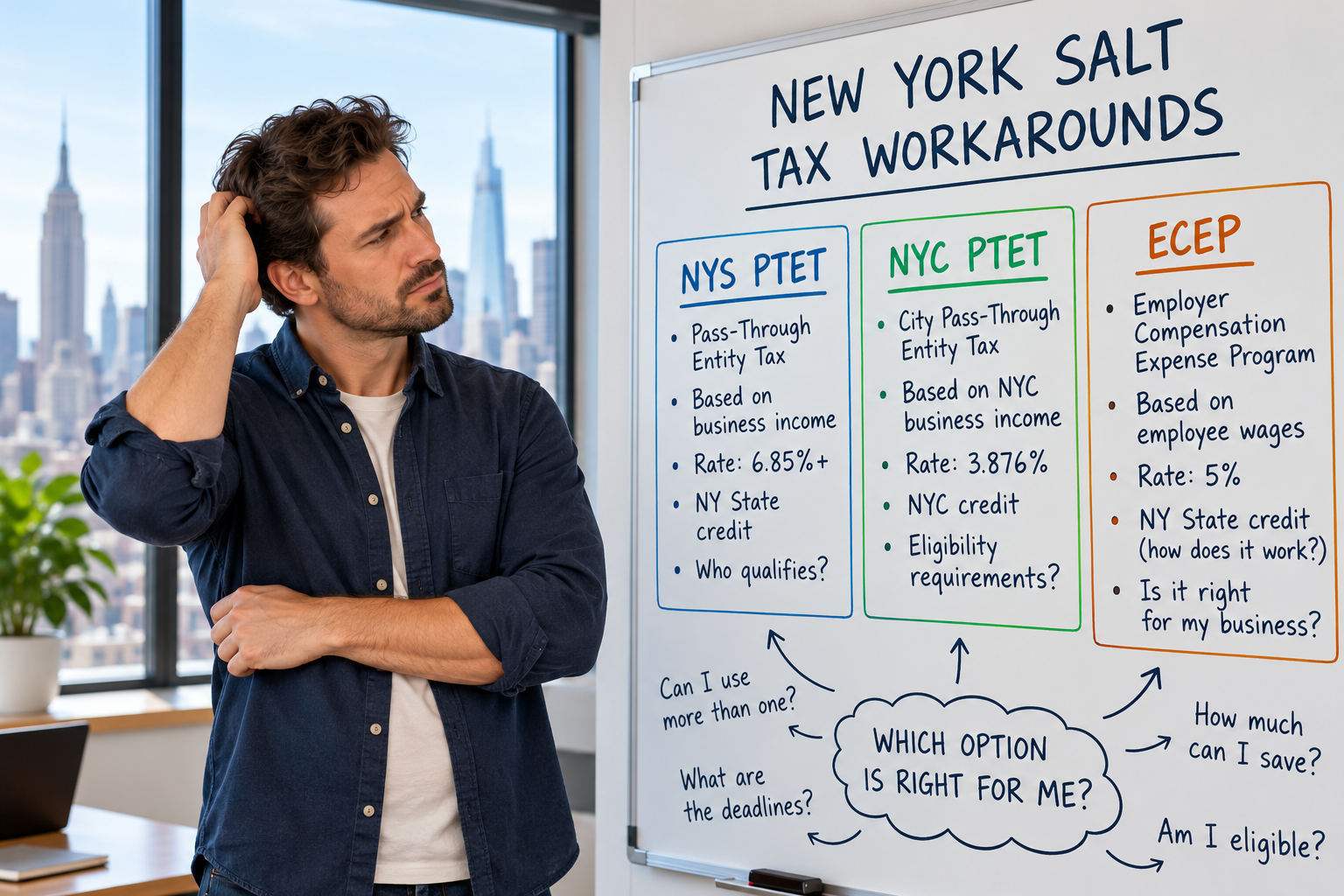
We love being in New York City, but running a business here can get complicated. We know because we run a business here, too. One area that deserves more attention is New York SALT tax workarounds. These programs can help eligible business owners reduce the federal tax impact of the limit on deducting state andContinue reading “New York SALT Tax Workarounds: PTET vs. ECEP and NYC Options”
Category Archives: Taxes
S-Corp Payroll Checklist: 8 Things Owners Should Review

If you own an S-Corp, our S-Corp payroll checklist covers eight things worth reviewing before your final payroll of the year. We see this regularly with small business owners. Everything looks fine in QuickBooks, the payroll runs are happening, and the owner has been taking money out of the business throughout the year. Then weContinue reading “S-Corp Payroll Checklist: 8 Things Owners Should Review”
You Wrote It Off Federally—So Why Is New York Still Taxing It?

One of the more confusing parts of New York bonus depreciation is that your federal tax return and your New York tax return can tell two very different stories about the exact same business purchase. We just finished a tax return for a new client who owns an S corporation, and this issue had aContinue reading “You Wrote It Off Federally—So Why Is New York Still Taxing It?”
New York City Domicile: The 183-Day Rule Is Only Half the Story

We are expecting to see New York City Domicile come up much more frequently because New York City now has a non-primary residence property surcharge, commonly referred to as the pied-à-terre tax, on certain higher-value homes, condominiums and cooperative apartments that are not used as a primary residence. That creates an interesting tax situation. AContinue reading “New York City Domicile: The 183-Day Rule Is Only Half the Story”
New York ECEP: What S-Corp Owners should do by December 1
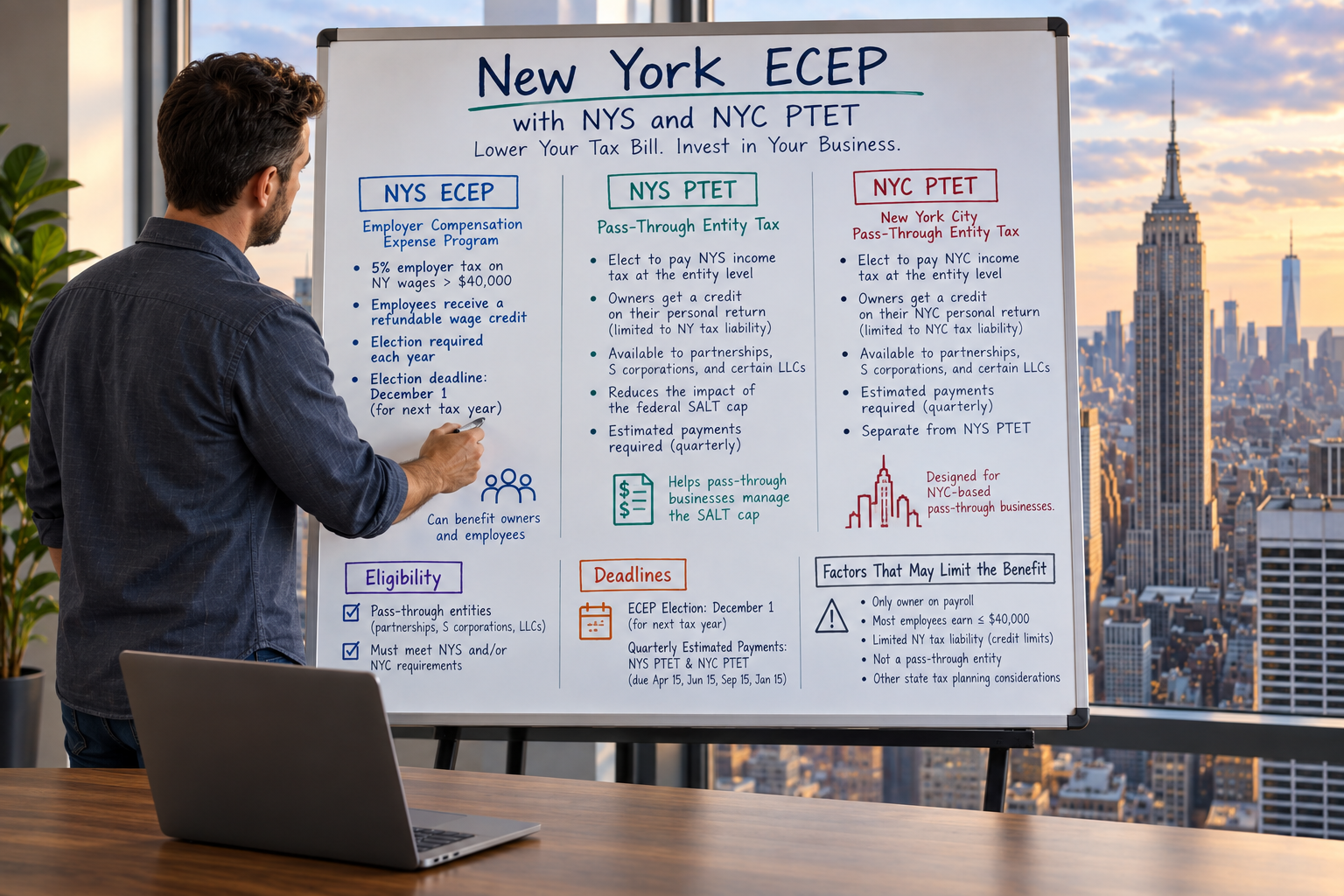
We love being in New York, but running a business here can be complicated. The New York ECEP is a good example: the election is made by the employer, the tax is paid through the business, and the related credit appears on an employee’s personal New York return. You have to look at all threeContinue reading “New York ECEP: What S-Corp Owners should do by December 1”
Can You Deduct a Vacation as a Business Expense?

Can you deduct a vacation as a business expense if you answer a few emails, take a client call, or schedule one business meeting while you are away? Generally, no. A small amount of work does not turn a personal vacation into a deductible business trip. As we work through quarterly tax planning with ourContinue reading “Can You Deduct a Vacation as a Business Expense?”
Business Tax Surprise: Why You Owe Taxes When the Cash Is Gone

A business tax surprise can feel especially frustrating when your company had a good year but there is not much money left in the bank. The short explanation is that your tax return is generally based on taxable profit—not on the balance in your business checking account. Your Business Can Be Profitable—even When Cash FeelsContinue reading “Business Tax Surprise: Why You Owe Taxes When the Cash Is Gone”
Small Business Health Insurance Options: Four Ways to Help Your Employees

This is the time of year when many of my clients receive their health insurance renewal notices and are shocked by the proposed increases. For some clients, simply maintaining the current plan is becoming financially unsustainable. Knowing what small business health insurance options are available can help with the increasing costs and complexity of managingContinue reading “Small Business Health Insurance Options: Four Ways to Help Your Employees”
“No Tax on Overtime” Creates a New Employer Reporting Responsibility

Your payroll system says an employee received $15,000 in overtime pay. How much belongs in employer qualified overtime reporting for 2026, is it $15,000, $10,000 or $5,000? For ordinary time-and-a-half overtime required by the Fair Labor Standards Act, the qualified amount may be only $5,000. The employee’s federal deduction generally applies to the extra one-half-timeContinue reading ““No Tax on Overtime” Creates a New Employer Reporting Responsibility”
“No Tax on Tips” Creates New Payroll Questions for Employers

If your payroll report says an employee received $12,000 in tips, do you know whether all $12,000 qualifies under the new federal rules? “No Tax on Tips” creates employer no tax on tips rules in 2026. Employer qualified tips reporting now requires more than putting every customer-related payment into one “tips” category. Employer No TaxContinue reading ““No Tax on Tips” Creates New Payroll Questions for Employers”